
What if Sermons Were Conversations?
“Dialogical preaching invites vulnerability and unpredictability into a worship service, which can be scary for a preacher, especially for one who likes to have everything planned and written out perfectly. But it also invites the Spirit to surprise us in incredible ways. ” - Rev. Julia Bertalan
By Rev. Julia Bertalan
Stepping into the pulpit is my least favorite part of my role as a pastor. It’s not that I get nervous speaking in front of those gathered. In fact, I absolutely love the scriptural study and creation of a sermon as I prepare for worship. It’s that preaching, in the style I learned, of one person standing in front of a congregation and delivering the Word, feels too one sided. I believe our Christian faith is best lived out when we lean fully into its communal foundation. It’s all about interconnectedness and community, so why should preaching be any different?
As I preach in the style I learned and witnessed most of my life, I find myself wondering what thoughts are running through the minds of those listening as we explore the scripture passage. I am curious about their questions. Is my message resonating? Do they have additional thoughts or wisdom to add to mine? I want to be in conversation about the scripture and how it relates to our individual and collective lives, not just share my own take. Some may say, “That’s what Bible studies are for,” but I have always longed for sermons to give space for conversations and connections too.
Over my 12 years of parish ministry, I have explored different ways to make worship more interactive, including during the sermon time. I’ve asked questions, encouraging worshipers to respond either out loud or in conversation with someone sitting next to them. Members of my congregation are not surprised when they find a blank sheet of paper stuffed into their bulletins, knowing that there will be some type of personal reflection opportunity or interaction during worship. While not every person is ecstatic about interactive worship, most worship participants welcome the invitation and express how it makes worship more impactful.
It wasn’t until recently that I discovered that this type of preaching I was longing for had a name, Dialogical Preaching or Conversational Preaching, and that, in fact, there were pastors in diverse settings across the country already changing the ways they preached to make it more interactive. My discovery started with a Facebook post by Nevertheless She Preached, shared by a friend. The post started like this:
“What if I told you, Preacher, that there was a new way to preach? A way that broke open the homiletical moment in such a way that the power dynamic between pulpit and pew was shattered in a most beautiful way? … What if I told you, Preacher, that "In the beginning was the Word," is better translated, "In the beginning was the Conversation?" What if we understood that "the Conversation was with God, and the Conversation was God?" Would it change the way we preach? It should. What if I told you it already has and we can show you how?”
The post was advertising a new cohort and retreat opportunity through Nevertheless She Preached, with one cohort specifically exploring this intriguing and exciting preaching style, Dialogical Preaching. When I applied to the program, I didn’t really know what I was getting into, but now, on the other side of it all, I can say that it has opened me to a whole new world of preaching possibilities. To be honest, it wasn’t the “fix all my preaching struggles” magic I was hoping for, but it gave me a name and language around the type of preaching I have been wanting for so long, along with resources and ideas to implement it. For example, I learned strategies on how to encourage congregants, who are used to just sitting and listening, to open up to the idea of becoming a more active participant. Strategies include starting off with questions that give worshipers space to consider questions in their mind without having to share out loud, or even prepping a few members before worship: sharing a question that will be asked and inviting them to be ready with a response when asked during the sermon.
So what is Dialogical Preaching exactly?
“Put simply,” Rev. Molly Brummett Wudel and Rev. Megan M. Pardue, two practicing dialogical preachers, shared with my cohort, “[dialogical preaching] is when the preacher invites everyone present to participate throughout the sermon by asking questions and weaving invitations for discussion throughout the preaching moment.”
In the best case scenario, “eyes and ears are focused on one another as much as the preacher, and people are encouraged to vulnerably wrestle with the text, the world as it is, and the world as it could be. Dialogical preaching invites everyone present to bring their entire selves to the gathering—their emotions, struggles, hopes, experiences, and doubts – and invites pastor and congregant to make claims from their own perspectives, to embrace interruption, and to remain open to the Spirit at work and one another.”
Dialogical Preaching is inviting others into the conversation between you and the divine during your actual preaching moment in worship. It strives to break down the hierarchical structure of traditional preaching and instead recognizes that everyone has something to offer.
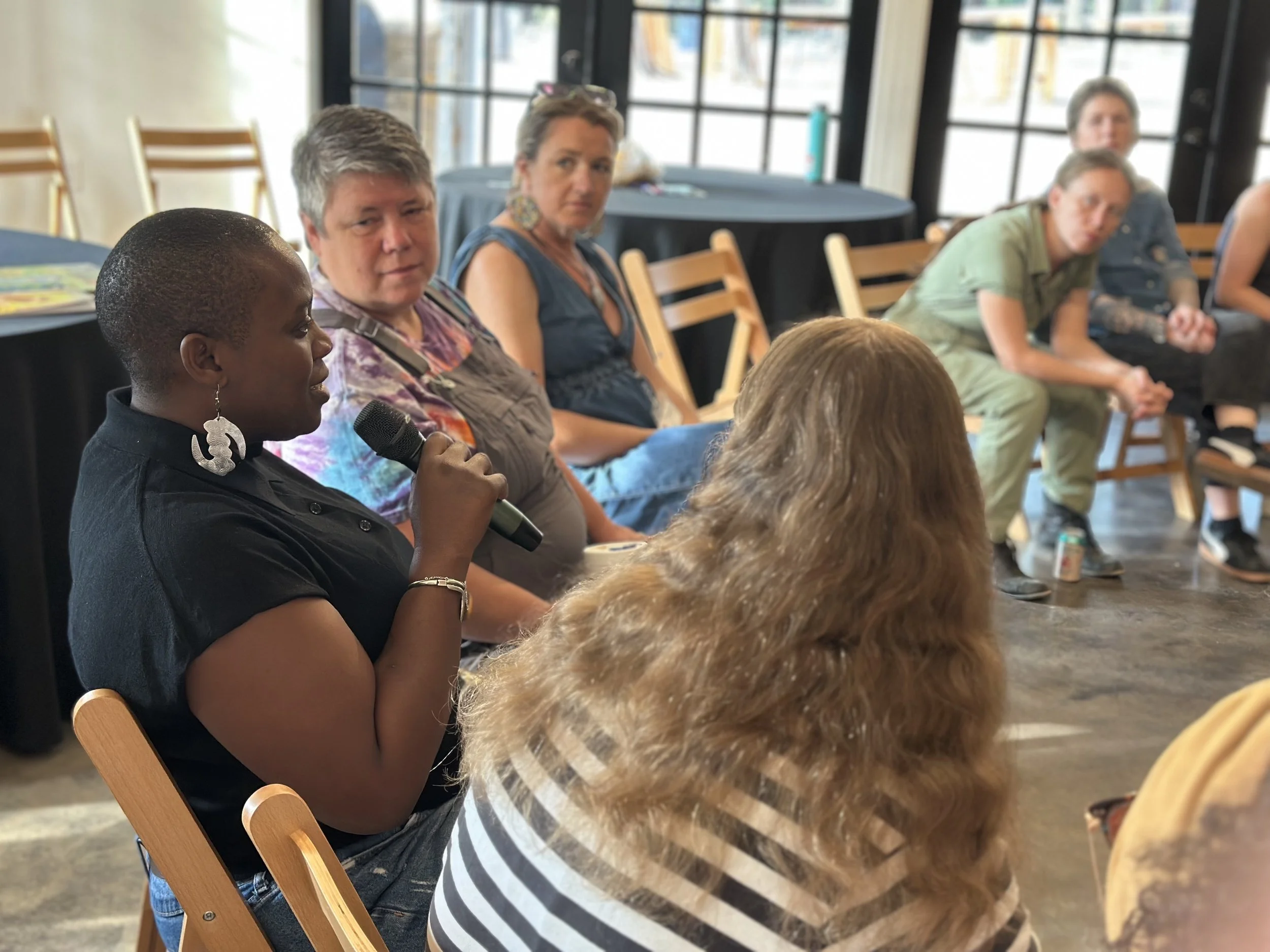
Because our worship contexts are diverse, dialogical preaching will look different depending on the space and the people gathered. For some communities, dialogical preaching works best “in the round” where those worshiping gather in a circle so dialogue feels more natural, while others make it work in the structured rows of pews layout. For some, it is simply a single question asked at the beginning of the sermon for worshipers to consider quietly while they listen. For others, the sermon can be a fully interactive conversation where questions are asked throughout, and there is space to talk with the whole group or in pairs. Other times, those gathered could be given a sheet of paper to jot down their own questions and thoughts or responses to questions offered. Many dialogical sermons have aspects of all of the above.
There is no single perfect type of question to ask while preaching in this dialogical style. Questions inviting one word responses, popcorn style, open-ended questions, vague or specific, ones that invite small or whole group conversations, or questions to reflect on silently–all work depending on your context and the level of comfort present among your people.
You probably can tell that this style of preaching excites me, but I can’t claim that it’s the easiest style for a preacher. Of course, there are challenges. Your preparation and writing change as you try to figure out where to include questions or when best to open the floor to conversation. If you’ve never done this before, will the congregation or leadership be receptive? What if no one engages and instead there are awkward silences? What if that member who loves to talk uses the time to share about the dinner they had last night and derails the whole thing or says something inappropriate? These are all scenarios that dialogical preachers consider each time they prepare.
Dialogical preaching invites vulnerability and unpredictability into a worship service, which can be scary for a preacher, especially for one who likes to have everything planned and written out perfectly. But it also invites the Spirit to surprise us in incredible ways. It allows the creative nature of God to help shape the gathering, often bringing insight that the preacher would have never discovered on their own. And most importantly, Dialogical Preaching helps those who are present remember that their voice, insights, and questions are just as needed and important as the preacher’s.
I have found that the more I preach in a dialogical style, the more connected I feel to my congregants and I often leave worship feeling more blessed and filled as I carry deeper insight from people’s lives and the ways scripture speaks to them. I have also found that the engagement experienced in worship has begun to flow beyond the sanctuary the more I preach in a dialogical style. The conversations during worship move into our coffee hour and continue throughout the week. I receive emails sharing new insights that have surfaced as the sermon's dialogue follows my people into their daily interactions. My members have also expressed that they feel more comfortable engaging with scripture during their personal study.
Over the next seven months, different preachers from diverse backgrounds and contexts will share their experiences with dialogical preaching, offering specific examples of practices they have used, sharing their learnings, and the ways it has impacted their congregation, ministry, and preaching practice. And of course, all challenges that have emerged along the way.
Begin to consider how you might introduce dialogical preaching in your setting if you haven’t already. Maybe give it a try. Start with one question and see how your congregation responds. If nothing else, know that preaching doesn’t have to be how it always has been. If you are like me and long for more connections and interactions, know that it can indeed happen while you preach. Thanks be to God!
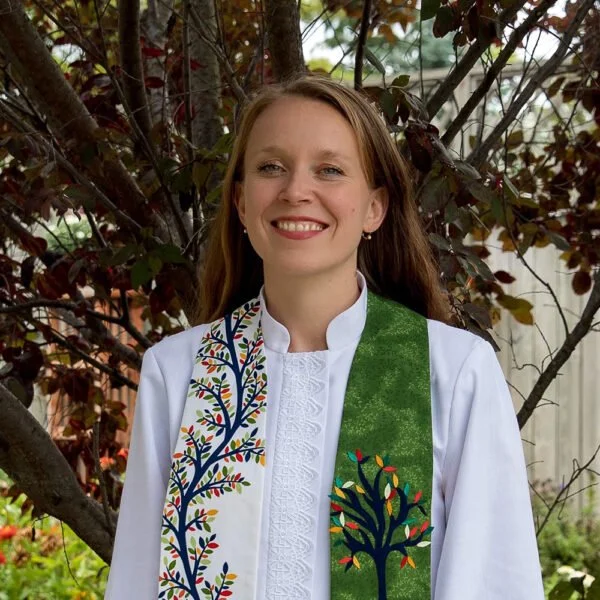
Rev. Julia Bertalan is the senior pastor at Packanack Community Church of Wayne, NJ. When not at church or hanging with her family of 5, you can find her engaged in her spiritual practice of wandering through life, finding God in every corner of this beautiful world.